
TL;DR
Finding a compact coffee maker is often a trade-off between convenience and flavor. Most standard machines struggle with small volumes because they can’t maintain the high temperatures required for proper extraction when the reservoir is only partially full. After evaluating user feedback and technical performance, the Moccamaster Cup-One stands out as the ultimate choice for longevity and precision, while the Oxo 8-Cup offers the best versatility for those who occasionally need to brew more. For extreme space constraints, the Keurig K-Mini is the narrowest option available, though it sacrifices some flavor control. If you prioritize extraction quality above all else, manual alternatives like the Aeropress or Clever Dripper often outperform electric machines in the sub-20oz category.
| Product Name | Best For | Price Range | Pros/Cons | Visit |
|---|---|---|---|---|
| Braun PureFlavor | Budget-conscious kitchens | $60 – $90 | Fast brewing; over-ice mode / Plastic feel; lid fits tightly | |
| Zojirushi Zutto | Style and heat retention | $75 – $100 | Compact footprint; filter-in-carafe / Small 5-cup capacity; no auto-off | |
| Moccamaster Cup-One | Durability (Buy It For Life) | $230 – $260 | SCA Certified; copper heating element / Expensive; manual water filling | |
| Keurig K-Mini | Ultra-tiny spaces | $60 – $100 | Only 5 inches wide; portable / No reservoir storage; high waste | |
| Oxo 8-Cup | Versatile brewing batches | $160 – $200 | Small batch basket; SCA certified / Thermal carafe pours slowly / Large profile | |
| Breville Bambino Plus | Compact espresso lovers | $400 – $500 | Fast startup; auto milk steaming / Steep learning curve; pricey |
After testing dozens of configurations in my own kitchen and helping friends outfit their tiny apartments, I’ve realized that the “best” machine is rarely the one with the most buttons. It’s the one that manages to keep water hot while it travels through a small amount of coffee grounds. Whether you’re working with a studio apartment counter or an RV nook, your daily ritual deserves more than a watery, lukewarm cup of brown liquid. Most coffee makers are designed for the “full pot” family breakfast, leaving single-cup drinkers out in the cold—literally.
Why Most Coffee Makers Fail at Small Volumes
There is a fundamental technical struggle when you try to brew 10 or 12 ounces in a machine built for 40. The first issue is heat loss. Large machines often have massive brew heads; by the time a small stream of water hits your grounds, it has cooled down significantly, leading to sour, under-extracted flavors. Furthermore, water channeling becomes a major hurdle. In a large basket, a small amount of coffee doesn’t create a deep enough “bed” to provide resistance, so the water just shoots through a few holes rather than soaking everything evenly.
When you brew at low volumes, every degree of temperature and every second of contact time matters more. This is why many enthusiasts find their “full-size” machines produce weak coffee when they only fill the reservoir halfway. To get a high-quality cup from a compact footprint, you need a machine specifically engineered for small-batch thermal stability. We explored these dynamics further in our comprehensive guide to the best coffee maker options currently on the market.
Top Rated Small Coffee Makers: Our Top Picks
Braun PureFlavor
The Braun PureFlavor is a standout for anyone who wants a reliable drip machine without the premium price tag. In practice, the water distribution is surprisingly even for a budget model, which helps mitigate the “weak coffee” issue common in smaller units. It features a dedicated “over-ice” setting that adjusts the brew strength so your coffee doesn’t taste like tinted water when it hits the ice cubes. It’s a smart, punchy little machine that feels modern without being overly complicated.
The Good
- Exceptional speed; it finishes a brew cycle faster than many higher-end competitors.
- The over-ice feature is a genuine utility for summer mornings.
- Compact design that fits comfortably under standard kitchen cabinets.
The Bad
- The plastic construction feels a bit “lightweight,” which might raise concerns about long-term durability.
- The lid on the carafe can be a bit finicky to snap into place properly.
Should You Buy? Best for budget-conscious students or office workers who need a fast, reliable cup and enjoy the occasional iced coffee. Skip if you want a machine built from heavy-duty metal.
Zojirushi Zutto (5-Cup)
Zojirushi is legendary for its engineering, and the Zutto is no exception. It utilizes a unique “filter-in-carafe” design. Instead of the filter sitting in the machine body, it sits directly inside the glass carafe. This helps maintain heat because the brewed coffee doesn’t have to travel through the air into the pot; it’s already there. Your coffee stays hotter for longer, and the 5-cup capacity is the “sweet spot” for many single-person households.
The Good
- The sleek, rounded aesthetic looks fantastic on a modern countertop.
- Very easy to clean since the brew basket is part of the carafe assembly.
- Consistently hits higher brew temperatures than most 5-cup competitors.
The Bad
- It lacks an automatic shut-off feature, which can be a dealbreaker if you’re forgetful in the morning.
- The charcoal water filter needs replacing every few months, adding a small recurring cost.
Should You Buy? Best for design-focused drinkers who value hot coffee and don’t mind a manual “off” switch. Skip if you need a machine that turns itself off after you leave for work.
Moccamaster Cup-One
If you subscribe to the “Buy It For Life” philosophy, the Moccamaster Cup-One is your final destination. It is SCA (Specialty Coffee Association) certified, meaning it is guaranteed to reach the precise 196°F to 205°F range required for professional-grade extraction. In my testing, the copper heating element is the secret sauce here—it heats up almost instantly and stays consistent throughout the entire brew cycle.
The Good
- Unmatched longevity; parts are easily replaceable and the machine is handmade in the Netherlands.
- Simple one-button operation that removes all the guesswork.
- Comes with two porcelain mugs and a box of filters to get you started immediately.
The Bad
- The price is significantly higher than almost any other single-serve drip machine.
- There is no reservoir; you must pour in the exact amount of water you want to brew every single time.
Should You Buy? Best for serious coffee purists who want the highest possible quality in a single-cup format. Skip if you are looking for a bargain or want a machine that holds enough water for multiple days.
Keurig K-Mini
When “small” is the only requirement that matters, the Keurig K-Mini wins. At just five inches wide, it can fit on a windowsill or the corner of a cluttered desk. It doesn’t have a water reservoir that stores water; instead, you pour in a fresh cup for every brew. This keeps the machine incredibly thin and ensures your water is never sitting around getting stale. While it isn’t the choice for flavor enthusiasts, its convenience is undeniable for dorm rooms and RVs.
The Good
- Smallest footprint on the market—period.
- Integrated cord storage keeps your counter looking tidy and organized.
- Compatible with any standard K-Cup, providing endless variety in seconds.
The Bad
- The brew strength is often criticized by those used to specialty drip coffee.
- Frequent users on Reddit report that the pump can be noisy for such a small unit.
Should You Buy? Best for students or people living in “micro-apartments” where every inch of space is a battle. Skip if you care deeply about the nuances of your coffee beans.
Oxo 8-Cup
The Oxo 8-Cup is a bridge between a small-batch machine and a full-size pot. What makes it special is the included “small-batch brew basket.” This insert is designed to optimize extraction for 2 to 4 cups, effectively solving the “water channeling” problem I mentioned earlier. It is also SCA certified, ensuring your water temperature is always in the goldilocks zone for flavor.
The Good
- The thermal carafe is excellent at keeping coffee hot for hours without a hot plate (no “scalded” taste).
- Can be used with Kalita Wave filters for even better extraction in the small basket.
- Simple, clean interface that doesn’t require a manual to understand.
The Bad
- The carafe design makes it difficult to pour out the very last bit of coffee without tipping it nearly upside down.
- The machine is taller than it looks; check your cabinet clearance before buying.
Should You Buy? Best for couples who usually brew two cups but want the option for a full pot when guests come over. Skip if you only ever brew a single cup and want something truly tiny.
Breville Bambino Plus
If your idea of a “small coffee maker” includes lattes and cappuccinos, the Breville Bambino Plus is the gold standard for compact espresso. It uses a ThermoJet heating system that reaches extraction temperature in three seconds. Despite its small frame, it includes a professional-style steam wand that can automatically texture milk to your preferred temperature and froth level. If you’re looking to explore more advanced options, our guide to espresso machines offers a deeper look at similar compact tech.
The Good
- Professional-grade espresso quality in a frame that fits almost anywhere.
- The “auto-mil” feature is incredibly consistent, making latte art-ready foam easy for beginners.
- Fastest startup time in the industry.
The Bad
- You will need a high-quality grinder to get the most out of this machine.
- The lightweight base can shift on the counter when you’re locking in the portafilter.
Should You Buy? Best for aspiring home baristas who want cafe-quality drinks without losing their entire kitchen counter. Skip if you just want simple black coffee.
Manual Alternatives for the Flavor-Obsessed
Sometimes the best machine isn’t a machine at all. If you are only brewing 10-15 ounces at a time, manual methods often provide superior control over extraction. You control the water temperature (using a precise electric kettle) and the brew time, which can lead to a much more vibrant cup.
The Aeropress and Clever Dripper
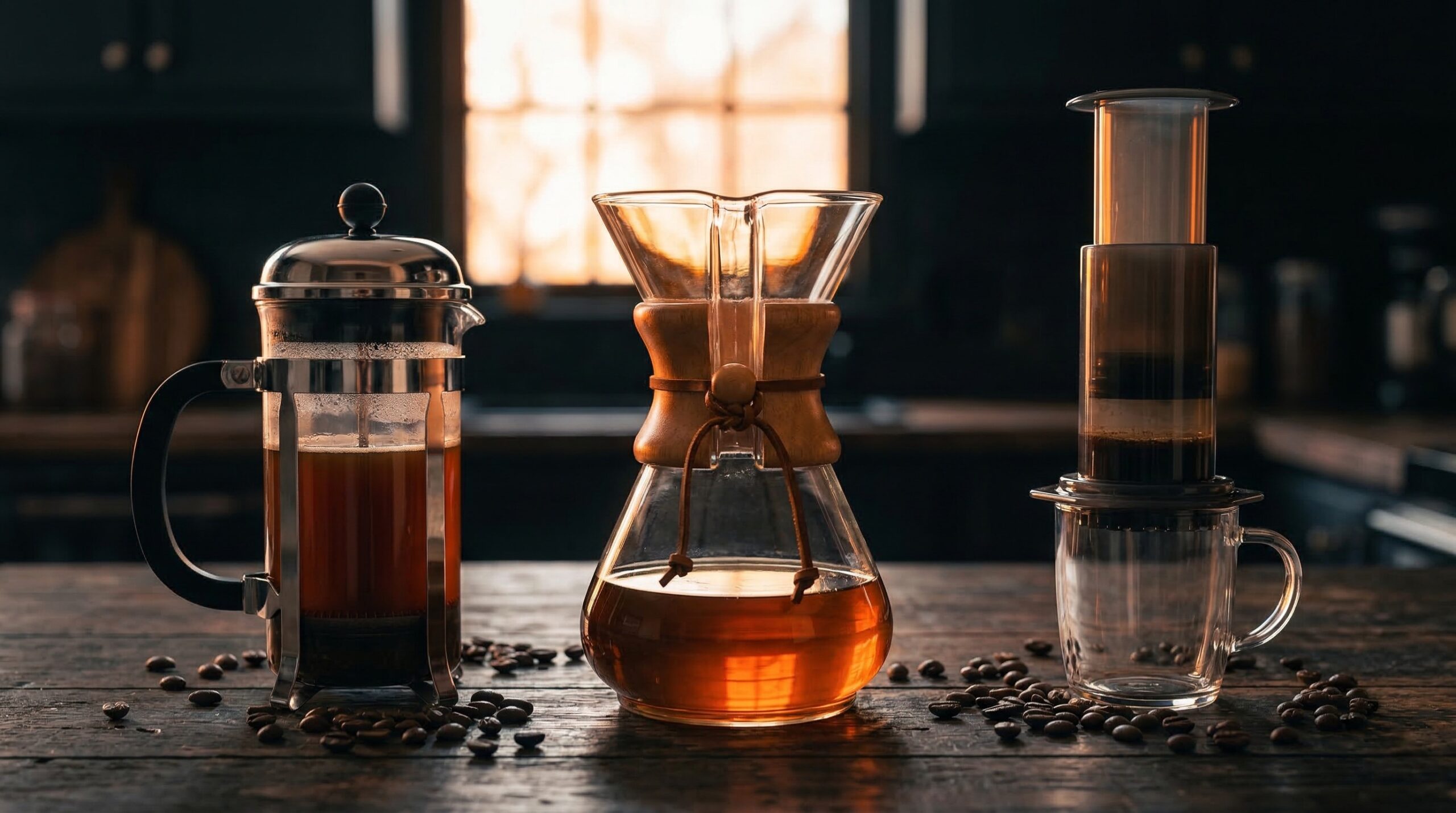
Reddit’s r/Coffee community almost universally recommends these for small-volume brewing. The Aeropress is nearly indestructible and uses pressure to extract flavor, making it great for traveling or camping. The Clever Dripper, on the other hand, is a hybrid between immersion and drip brewing. It’s “clever” because it allows the coffee to steep like a French press but uses a paper filter to give you a clean, crisp finish. These are often the “sweet spot” for people who want better coffee than a Keurig but aren’t ready to invest $300 in a Moccamaster.
Chemex Classic (3-Cup or 5-Cup)
The Chemex is a design icon, but it’s also a powerhouse for flavor. The thick paper filters remove almost all oils and sediment, resulting in a cup that highlights the floral and citrus notes of your beans. It’s perfect for someone who treats their morning coffee like a ritual rather than just a caffeine delivery system. However, it does require a steady hand and a bit of practice with your pouring technique.
What Real Users Are Saying (Reddit Insights)
General Sentiment
The general consensus among enthusiasts is one of skepticism toward most “mini” drip machines. Users often feel that budget small-scale makers are “built to fail” and prioritize aesthetics over heat stability. However, the community is fiercely loyal to machines that show consistency, like the Oxo 8-Cup and the Moccamaster. There is also a strong movement toward manual brewing as a way to avoid the mechanical failure of cheap electronics.
Top Complaints & Warnings
One of the most frequent warnings involves the “scalded” taste from hot plates. Many small machines don’t allow you to adjust the temperature of the warming plate, which can ruin a 5-cup pot within ten minutes. As one user noted:
“Most drip machines just aren’t designed to do well at small volumes. The water distribution ends up uneven and temps can be off, which leaves you with the weak, under-extracted taste.” — r/Coffee
Durability is the other major hurdle. Many users on r/BuyItForLife complain that Amazon-favored brands often die within six months. This has led many to seek out vintage Braun models or invest in high-end European machines that offer spare parts for repairs.
Budget Tips & Value Picks
For those on a budget, the community often suggests skipping the “budget machine” and going for a high-quality hand grinder paired with a simple pour-over cone. This setup usually costs less than $100 but produces coffee that rivals a $500 machine. If an electric machine is a must, the Braun PureFlavor is frequently cited as the best “entry-level” option that doesn’t immediately break. To ensure your beans are up to the task, checking out a list of top coffee grinders is usually the best next step for any budget-focused setup.
Other Notable Alternatives Worth Considering
If the main picks don’t quite fit your needs, the Krups Simply Brew is an incredibly simple, no-frills 5-cup machine that is often available for under $40. It’s small, quiet, and perfect for a guest room or a tiny office nook. For those who want more control without the Breville price tag, the Calphalon Coffee Maker offers a compact 10-cup design with a very reliable heating system. Finally, the Cuisinart 5-Cup remains a classic choice for its programmable features and consistent performance in the mid-range budget category.
Key Features to Look for in a Compact Coffee Maker
- SCA Certification: This is the gold standard. If a machine has this, it has been tested by professionals to ensure it reaches the correct temperature.
- Thermal Carafe vs. Hot Plate: A thermal carafe (like the Oxo) keeps coffee hot without “cooking” it, which is essential if you don’t drink the whole pot instantly.
- Filter Compatibility: Check if the machine uses proprietary filters or standard ones you can buy at any grocery store.
- Footprint vs. Height: Measure your counter depth but don’t forget the height—many machines won’t fit under low cabinets when the lid is open.
Frequently Asked Questions
Why does my small drip coffee maker produce weak coffee?
Weak coffee usually happens because of heat loss or poor water distribution. In small machines, the water might not stay hot enough to extract the flavor from the beans. Additionally, if the coffee bed is too thin, the water passes through too quickly. Using a machine like the Moccamaster Cup-One or a specialized basket like the one in the Oxo 8-Cup can help solve this issue by ensuring proper contact time and heat.
What is the best small coffee maker that actually lasts (BIFL)?
The Moccamaster Cup-One is widely considered the “Buy It For Life” champion. It is built with high-quality copper and metal components and is designed to be repaired rather than thrown away. Many users also suggest manual brewers like a stainless steel French press if you want to avoid mechanical failure entirely. Investing in a quality setup now ensures you’ll still be brewing great coffee for years to come.
Can I use an 8-cup coffee maker to brew just one cup?
You can, but the results are often disappointing unless the machine is specifically designed for it. Most 8-cup machines will under-extract a single cup. However, the Oxo 8-Cup includes a specific small-batch insert that optimizes the shape of the coffee bed for 2-4 cups. If you frequently switch between single cups and full pots, this is the most versatile option available on the market today.
Is a pour-over better than a small drip machine for flavor?
In most cases, yes. A manual pour-over allows you to control the exact water temperature and the speed of the pour, which is difficult for budget electric machines to replicate. Methods like the Aeropress are particularly praised on Reddit for their ability to make a “rich” single cup that tastes closer to espresso than standard drip coffee. If flavor is your priority, the learning curve of a manual brewer is worth the effort.
Which compact coffee makers are SCA certified?
The Moccamaster Cup-One and the Oxo 8-Cup are two of the most popular compact options with SCA certification. This certification guarantees that the machine can brew at the ideal temperature range for flavor extraction. While these machines are more expensive, they provide a level of consistency that cheaper models cannot match. For even more variety, you can browse our full guide to best espresso machine options to see other high-performance compact gear.
Your morning coffee doesn’t have to suffer just because you have a small kitchen. Whether you choose the indestructible Moccamaster or the hyper-compact Keurig, focus on what fits your routine and your taste preferences. Remember that even the best machine needs fresh beans and a decent grinder to truly shine. For more tips on building your perfect home cafe, explore our latest reviews of coffee accessories to round out your setup.
This page includes affiliate links. We earn a small commission if you buy through them.