
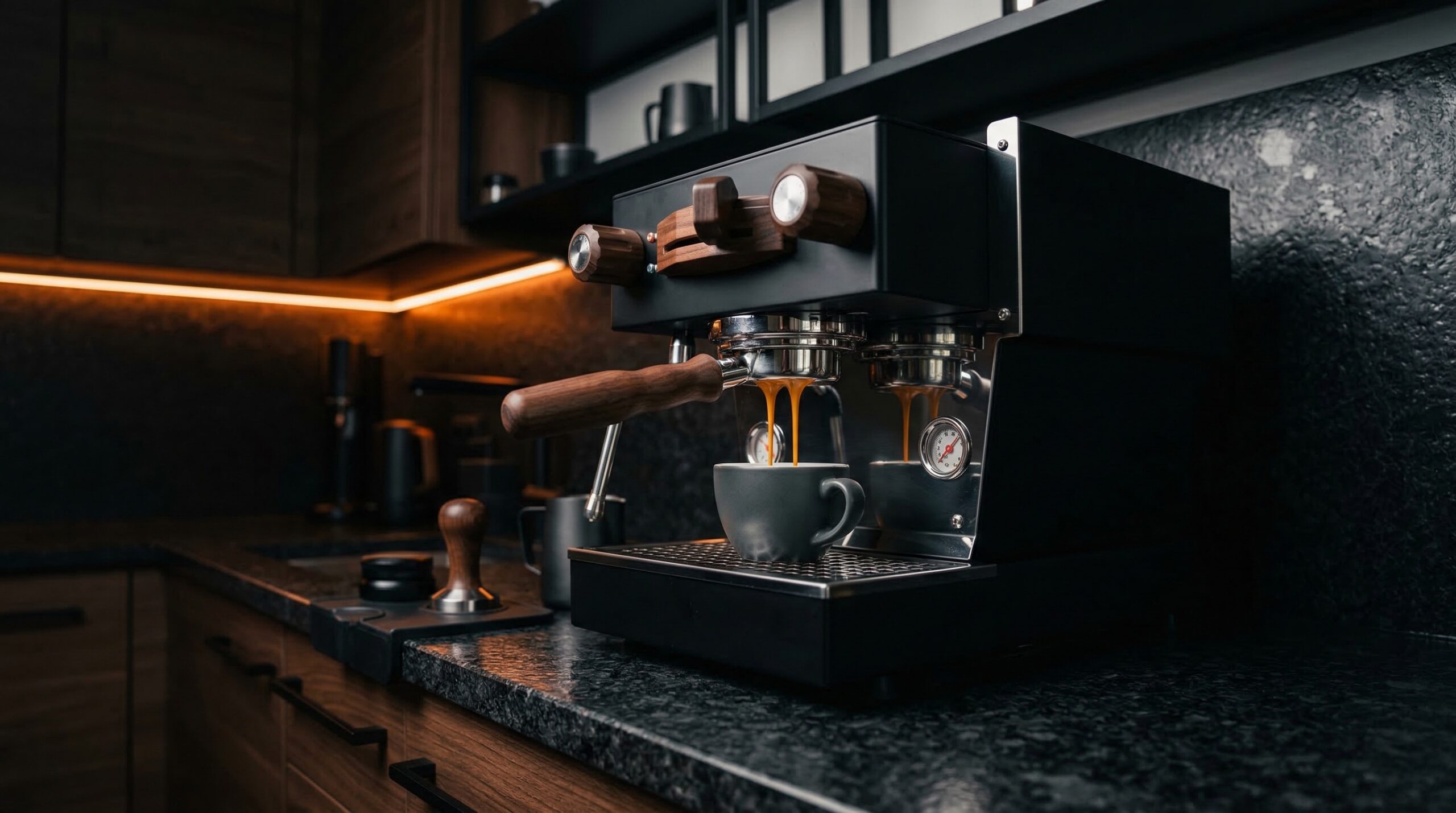
Best Coffee Grinder for Espresso

TL;DR

Selecting a coffee tool for espresso is the most important decision in your home barista journey. While the espresso machine handles the water and pressure, the quality of your extraction is entirely dependent on the uniformity of your coffee particles. In 2026, the market has shifted toward single-dosing workflows and high-precision flat burrs that were once reserved for commercial settings. For most enthusiasts, the DF64 Gen 2 provides the best balance of professional-grade results and value, while the Baratza Encore ESP remains the most approachable entry point for those just starting out. If you have a larger budget and prioritize texture, the Niche Zero continues to lead the pack for workflow simplicity and a traditional syrupy mouthfeel.

Product Name Best For Price Range Pros/Cons Visit
DF64 Gen 2 Performance & Value $390 – $450 + Low retention
– Needs RDT
Baratza Encore ESP Beginner Simplicity $190 – $200 + Easy to use
– High noise
DF54 Extreme Budget $220 – $240 + Professional burrs
– Slower output
Niche Zero Texture & Workflow $650 – $700 + Incredible body
– Import costs
Timemore Sculptor 064S Dual-Purpose Use $450 – $550 + Fines knocker
– Long seasoning
Weber EG-1 End-Game Precision $3,500 – $4,000 + Ultimate build
– Massive price
1Zpresso J-Max Manual Portability $150 – $200 + Precision per $
– Physical effort
Eureka Mignon Specialita Silent Hopper Use $500 – $650 + Very quiet
– Small dial

Why Your Grinder Matters More Than Your Espresso Machine

After testing over a dozen espresso setups across different price points, I’ve found a recurring truth: a mediocre machine with an incredible milling tool makes great coffee, but an expensive machine with a poor tool makes a mess. Espresso requires a level of precision that other brewing methods don’t. You are forcing water through a compressed puck at high pressure; if your particles aren’t perfectly uniform, the water will find the path of least resistance. This leads to channeling, where your coffee tastes both sour and bitter at the same time.

High-quality coffee grinders allow for micro-adjustments. We are talking about shifts measured in microns. A slight turn of the collar can be the difference between a shot that gushes out in fifteen seconds and one that drips slowly for forty. Beyond just the particle size, burr alignment ensures that the two cutting surfaces are perfectly parallel. If they aren’t, you get a mix of large boulders and tiny fines, ruining your clarity. If you’re building a home bar, prioritize the milling equipment. Your espresso machines should be the second item on your shopping list.

The Best Espresso Grinders for 2026

DF64 Gen 2

The DF64 has become a staple in the community for a simple reason: it offers the performance of units twice its price. This is a single-dosing powerhouse featuring 64mm flat burrs. In practice, I’ve found that it produces extremely clear flavor profiles, making it a favorite for those who enjoy light-roast specialty beans. The Gen 2 addressed many of the complaints from the original, adding an integrated ionizer to reduce static and improving the overall build quality with a more robust metal finish.

The Good

  • Exceptional clarity and flavor separation thanks to the large flat burr set.
  • Industry-standard 64mm burr size means you can easily swap in SSP burrs later.
  • Low retention; what you put in is almost exactly what comes out.

The Bad

  • It still benefits greatly from RDT (spritzing water on beans) to prevent a mess.
  • The power button placement on the side is slightly awkward for some kitchen layouts.

Should You Buy? Best for enthusiasts who want professional-grade flat burr performance without spending four figures. Skip if you prefer a “set it and forget it” hopper workflow.

Baratza Encore ESP

For years, the standard Encore was the king of filter coffee but couldn’t quite handle the fine requirements of espresso. The “ESP” version changed that by introducing a dual-range adjustment system. The first twenty settings are dedicated specifically to espresso with micro-steps, while the rest of the dial handles everything from AeroPress to cold brew. It’s a workhorse that feels right at home in any kitchen.

The Good

  • Remarkable value; it’s one of the most affordable ways to get genuine espresso capability.
  • World-class customer support and serviceability from Baratza.
  • Transitioning from espresso to pour-over is intuitive and quick.

The Bad

  • It is significantly louder than many of the higher-end DC motor options.
  • The plastic housing feels a bit lightweight compared to premium metal units.

Should You Buy? Best for beginners who need a reliable, multi-purpose machine that won’t break the bank. Skip if you are sensitive to noise or want a “zero-retention” single-doser.

DF54

The DF54 is essentially a miniaturized version of the DF64, and it has absolutely shaken up the budget category. It uses 54mm flat burrs and somehow maintains the high build quality of its bigger brother. During my testing, I was shocked at how quiet it is. It produces a very consistent particle size that rivals machines in the $500 range, despite costing about half that.

The Good

  • Incredibly compact footprint that fits under any cabinet.
  • Surprising build quality with a full metal body at a budget price point.
  • Includes an ionizer for static reduction, which is rare at this price.

The Bad

  • Milling is slower than 64mm models; expect a few extra seconds per dose.
  • Limited burr upgrade options compared to the 64mm ecosystem.

Should You Buy? Best for the space-conscious barista on a strict budget who still wants flat-burr clarity. Skip if you regularly make coffee for large groups and need speed.

Niche Zero

The Niche Zero is perhaps the most famous unit in the modern era of home espresso. It uses 63mm conical burrs that excel at producing a rich, textured, and syrupy shot. What sets it apart is the workflow. It is tactile, simple, and has almost zero “retention,” meaning no old coffee gets stuck inside to ruin your next shot. It is the gold standard for ease of use.

The Good

  • The most pleasant workflow on the market; dialing in is a breeze.
  • Produces classic, thick espresso with a lot of body and sweetness.
  • Minimalistic aesthetic that looks beautiful on any countertop.

The Bad

  • Not ideal for those who prefer high-clarity, tea-like light roast pour-overs.
  • Depending on your location, shipping and import taxes can be steep.

Should You Buy? Best for those who value texture and a seamless, frustration-free morning routine. Skip if you are chasing “clarity” and flavor separation above all else.

Timemore Sculptor 064S

Timemore entered the high-end electric market with the Sculptor series, and the 064S is their espresso-focused entry. It features a unique “fines knocker” that you twist to vibrate any remaining particles into your cup. It also has a variable speed motor, allowing you to experiment with how different RPMs affect your flavor profile. It’s a high-tech option for the curious barista.

The Good

  • The rotary fines knocker is genuinely effective at keeping the internal path clean.
  • Variable RPM control allows for deep experimentation with extraction.
  • Very quiet operation and a modern, sleek design.

The Bad

  • The burrs require a significant amount of “seasoning” (running several bags of coffee through) before they hit peak performance.
  • Stepless adjustment can be sensitive; small movements go a long way.

Should You Buy? Best for the experimental home barista who wants a high-tech tool for both espresso and filter. Skip if you want peak performance right out of the box without seasoning.

Weber EG-1

If budget is no object, the Weber EG-1 is often cited as the “end-game” choice. It is a massive, over-engineered piece of machinery with 80mm flat burrs. The precision here is unmatched. It’s designed to be completely cleaned in seconds without losing your settings, thanks to a magnetic burr mount system. It is as much a piece of industrial art as it is a kitchen appliance.

The Good

  • Unparalleled build quality; this is built to last decades.
  • Magnetic burr mounting allows for tool-free cleaning.
  • Absolute top-tier flavor clarity and particle uniformity.

The Bad

  • The price is prohibitive for all but the most dedicated enthusiasts.
  • The footprint is large, requiring significant counter space.

Should You Buy? Best for the luxury coffee enthusiast who wants the absolute best precision regardless of price. Skip if you have any semblance of a budget.

1Zpresso J-Max

Don’t dismiss manual milling. The 1Zpresso J-Max offers 8.8-micron adjustments per click, which is more precise than many electric units costing $500. It uses titanium-coated burrs that cut through beans with surprising efficiency. If you only make one or two drinks a day, this offers the highest cup quality for the least amount of money.

The Good

  • Incredible precision for dialing in difficult espresso shots.
  • Completely silent and portable—great for travel or early mornings.
  • The magnetic catch cup makes the workflow feel premium.

The Bad

  • Milling for espresso is a physical workout, especially with light roasts.
  • Not practical if you are frequently hosting guests and making back-to-back drinks.

Should You Buy? Best for the patient barista who wants maximum quality on a tight budget. Skip if you have joint pain or a low tolerance for manual labor.

Eureka Mignon Specialita

While single-dosing is the current trend, many people still prefer the convenience of a hopper. The Eureka Mignon Specialita is a classic Italian-made unit that is famously quiet. It features a digital timer that allows you to dose by time, which is very consistent once you have your beans dialed in. It’s a reliable, sturdy option for a more traditional workflow.

The Good

  • Incredibly quiet milling, perfect for early risers with sleeping families.
  • High-quality Italian craftsmanship and solid metal construction.
  • Reliable timed dosing that simplifies your morning routine.

The Bad

  • The adjustment dial is quite small, making large jumps between brew methods difficult.
  • Higher retention than dedicated single-dosing units.

Should You Buy? Best for those who want a quiet, hopper-based routine and don’t plan on switching beans frequently. Skip if you enjoy hopping between different coffees every day.

The Manual Alternative: Is Hand Grinding Worth It?

Many people ask if manual milling is a chore or a ritual. In my experience, it’s a bit of both. Units like the 1Zpresso J-Max provide a level of build quality that you simply cannot find in an electric version at the same price. You are paying for the burrs and the bearings, not a motor and electronics. However, espresso requires a very fine setting, which increases the resistance. Milling 18 grams of coffee can take anywhere from 30 to 60 seconds of vigorous effort. If you value the tactile nature of the craft and want to maximize your budget, it’s a great path. If you just want your caffeine fix as quickly as possible, you’ll likely find it frustrating within a week.

What Real Users Are Saying (Reddit Insights)

General Sentiment

The consensus across r/espresso and r/Coffee is that the “grinder first” philosophy is the only way to go. Most users regret buying a “starter” machine like a cheap blade or standard burr tool and eventually spending more money to upgrade anyway. The community currently favors the DF64 and Niche Zero as the two heavyweights that most people should aim for.

“Don’t get tricked into thinking you need a $900 setup unless you’re chasing micro-adjustments. What actually matters is burr alignment and how easy it is to dial between types.” — r/JamesHoffmann

Top Complaints & Warnings

Static remains the number one complaint across almost all models, even high-end ones. Users frequently mention that “zero retention” is often a marketing exaggeration. In humid environments, coffee particles will stick to anything. Another common warning is about the “Baratza Sette 30/270” series being incredibly loud, often compared to a jet engine in a small kitchen. For those looking at best espresso machine pairings, users warn that built-in milling tools (like those in the Breville Barista Express) are often the weakest link in the chain.

“Still need to spritz water to minimize static but super happy with it otherwise.” — Reddit user on Fellow Ode Gen 2

Budget Tips & Value Picks

The Reddit community has recently crowned the DF54 as the ultimate value pick. For under $250, it provides a level of consistency that was previously unavailable at that price point. Another common tip is to look for refurbished Baratza units or used Mazzer commercial units that can be cleaned and fitted with new burrs for a “buy it for life” setup on a budget.

Buying Guide: Key Features to Obsess Over

Flat Burrs vs. Conical Burrs

Flat burrs consist of two parallel rings. They tend to produce a more uniform particle size, which leads to higher “clarity”—you can taste the individual notes of citrus, chocolate, or berries. Conical burrs use a cone-shaped center burr. They produce a wider distribution of particle sizes, which creates more “body” and that classic syrupy espresso mouthfeel. Neither is strictly better; it depends on your palate.

Single Dosing vs. Hopper Grinding

Single dosing means weighing your beans for each shot, putting them in, and milling them until empty. This keeps beans fresh in an airtight bag and allows you to switch between decaf and regular easily. Hopper grinding stores a large amount of beans in a clear bin on top. It’s faster and more convenient but exposes beans to air and light, and it’s harder to switch coffees.

Burr Alignment and Build Quality

Precision is everything. If your burrs aren’t perfectly aligned, you’ll never get a consistent shot. Look for units with heavy metal construction and a reputation for tight tolerances. While plastic units like the coffee makers you see in big-box stores are fine for drip, they often flex under the pressure required for espresso milling, leading to inconsistent results.

Other Notable Alternatives Worth Considering

  • Fellow Opus: A versatile and stylish entry-point that handles both espresso and filter well, though the internal adjustment ring can be confusing.
  • 1Zpresso K-Ultra: An incredible manual tool that leans more toward clarity and pour-over but is very capable for espresso.
  • Baratza Sette 30: Extremely fast and low retention, though it lacks the micro-adjustments of its more expensive siblings and is quite loud.

Frequently Asked Questions

Can I use the same grinder for espresso and pour-over?

Yes, but it depends on the model. Some units, like the Baratza Encore ESP or the Timemore Sculptor 064S, are designed with dual-range adjustments to handle both. However, many dedicated espresso tools have “stepless” adjustments that make it difficult to jump back and forth between settings accurately. If you brew both daily, look for a “stepped” model with clear markings or a versatile all-rounder like the Fellow Opus.

Is it worth upgrading to a $500+ grinder from a starter model?

Absolutely. The jump from a basic $100 tool to something like the DF64 Gen 2 is the single biggest improvement you can make to your coffee. Higher-end units offer better burr alignment and more precise adjustments, which reduces frustration when dialing in. You’ll notice fewer sour shots and much better flavor separation in your espresso. For more on high-end setups, check out our guide to the best coffee maker options for different styles.

Why is flat burr alignment so important for espresso?

Alignment ensures that the burrs stay perfectly parallel as they spin. Even a tiny tilt can cause one side to produce larger particles than the other. This “unimodal” distribution is critical for espresso because it ensures even water flow through the puck. Without proper alignment, you get “fines” that clog the basket and “boulders” that let water rush through, resulting in an unbalanced, inconsistent taste.

How do I stop my coffee grinder from producing static?

The most effective method is “RDT” (Ross Droplet Technique). Use a small spray bottle to mist your coffee beans with a tiny amount of water before milling. This neutralizes the static charge created by friction. Some modern units, like the DF54, have built-in ionizers to help with this, but even then, a quick spritz of water can keep your workspace much cleaner.

Which is better for espresso: Niche Zero or DF64?

It depends on your flavor preference. The Niche Zero uses conical burrs, which are better for traditional, thick, chocolatey espresso. It also has a simpler workflow. The DF64 uses flat burrs, which provide more clarity and are better for tasting the bright, acidic notes in light roasts. The DF64 is also more customizable since you can swap the burrs for different profiles later on.

Final Thoughts

Investing in a high-quality milling tool is the most direct path to better espresso at home. Whether you choose the incredible value of the DF54 or the refined workflow of the Niche Zero, remember that consistency is your goal. A good tool doesn’t just make better coffee; it removes the guesswork and frustration from your morning ritual. Take the time to understand your own palate—whether you prefer “texture” or “clarity”—and choose the burr type that matches your taste. Happy brewing!

Disclosure: We earn a small commission on qualifying purchases through our Amazon links, at no extra cost to you.