
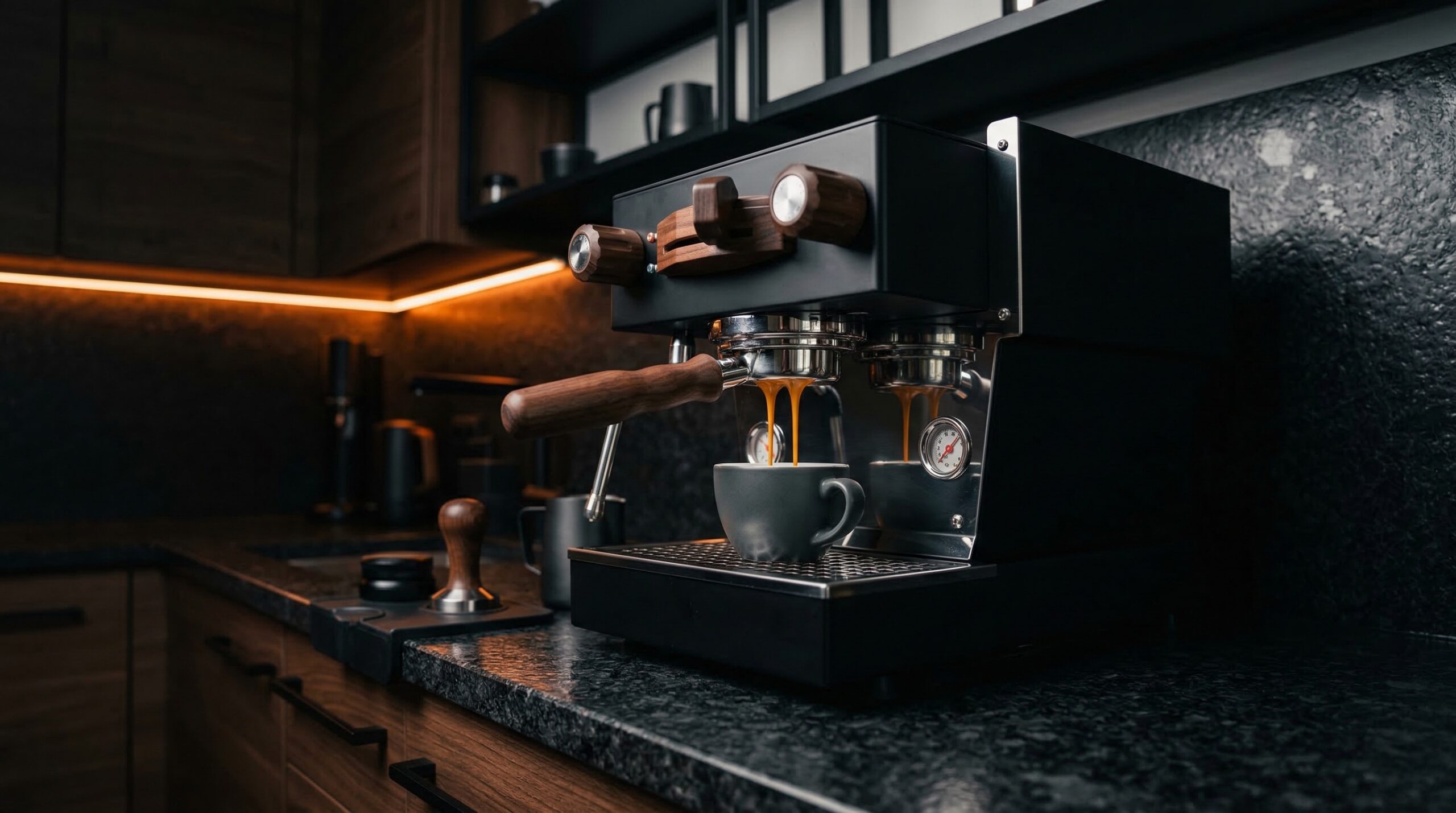
TL;DR
If you want true push-button espresso drinks at home, a super-automatic is the simplest path: it grinds, doses, brews, and (often) froths milk with minimal input. The big day-to-day difference isn’t “espresso power” — it’s how easy the milk system is to rinse and how manageable the ongoing cleaning and descaling routine feels.
Top Recommended Espresso Machines
| Product | Best For | Price | Pros/Cons | Visit |
|---|---|---|---|---|
| Philips LatteGo E4441/50 | Low-fuss milk drinks with quick rinse | $600 – $900 | One-touch milk focus; brand-level service/reliability feedback is mixed | Visit Philips |
| De’Longhi Magnifica Evo Espresso Machine with Automatic | Budget-friendly super-auto convenience | Check price on Amazon | Simple bean-to-cup workflow; smaller Amazon review sample so confidence is limited | Visit Amazon |
Top Pick: Best Overall Espresso Machines
Philips LatteGo E4441/50
Best for: Busy households that want cappuccinos and lattes with minimal daily effort, especially in a small-kitchen setup where you’ll appreciate quick milk cleanup.
The Good
- Built around convenience: the LatteGo line is designed for one-touch milk drinks, which is usually the main reason people choose a super-automatic.
- Good fit for repeatable routines (same drink, same button) when you’re not trying to fine-tune dose and yield like you would on a semi-automatic setup.
- Typically lands in the “affordable super-auto” bracket compared with many premium European bean-to-cup machines.
- Daily workflow can be straightforward: make drink, run a quick rinse, empty the drip tray/grounds as prompted (your actual cadence will depend on household volume).
The Bad
- This listing is DTC-routed here, and the most visible brand-level public rating signal we have is not flattering: Trustpilot shows low overall satisfaction for the broader Philips.com shopping experience, which may reflect support, shipping, or expectations rather than this exact model.
- Like most super-automatics, you should expect “very good café-style milk drinks” more than competition-style straight espresso — the grinder/brew-group system usually limits how far you can push grind fineness and dose.
- Ongoing ownership still requires regular rinses and periodic descaling; if you ignore water hardness and scale, performance tends to drift.
Reliability + safety notes: As with any countertop appliance that heats water and produces steam, keep hands clear of hot spouts and run cleaning cycles carefully. Also look for common electrical safety marks (for example, UL or ETL listed) on the unit/packaging when it arrives; UL’s consumer guidance on marks can help you verify what you’re seeing (UL Listed mark resources).
Maintenance reality check: Plan on milk-rinse steps after milk drinks, plus scheduled descaling based on your water hardness. Specialty Coffee Association guidance on water is a useful baseline for understanding why scale forms and why taste can change when water chemistry is off (Specialty Coffee Association (SCA)).
Rating context: Trustpilot shows Trustpilot 1.4/5 across 1,377 reviews for Philips.com overall. We treat that as a “support and purchase experience” signal — not a definitive measure of this one machine’s cup quality — but it’s still worth weighing for a high-dollar appliance.
Our Take: If your priority is push-button milk drinks with low day-to-day friction, the LatteGo E4441/50 is the best fit in this shortlist — just go in expecting super-auto convenience first, and be prepared to stay on top of rinse/descale prompts.
De’Longhi Magnifica Evo Espresso Machine with Automatic
Best for: A first super-automatic in the $450–$500 range for someone who wants bean-to-cup espresso at the press of a button (and isn’t chasing café-level shot experimentation).
The Good
- Convenience-forward design: you’re buying it to automate grinding, dosing, and brewing, which is ideal for quick weekday drinks.
- User feedback highlights “coffee” and “well” as common themes, suggesting many buyers are satisfied when expectations match the category (easy, consistent drinks over manual control).
- Good candidate for households that mainly drink espresso-based coffees (americanos, lattes, cappuccinos) and prefer repeatability over tinkering.
- Price sits below many higher-tier super-automatics, which can make ongoing ownership (filters, descaler, cleaner) feel more reasonable.
The Bad
- Buyer review volume is still small (32 reviews), so it’s harder to separate “normal learning curve” complaints from true reliability trends.
- Some user feedback language includes “purchased” and “machine,” which is vague but often correlates with returns/fit issues (counter space, noise, learning the menu, or expectations around espresso strength).
- As with most super-autos, the espresso profile is constrained by the internal grinder and brew unit; you can often change strength and grind settings, but you won’t get the same dial-in range as a semi-auto with a separate grinder.
3.5/5 across 32 Amazon reviews
“very well packed for shipping. instructions detailed, in tiny font but legible. was hesitant about “refurbished” but looks and works like new. grinder fineness dial under the top lid was set to 3 when it arrived. that was too fine, the water didn’t get through the ground coffee disc and backed up, making a mess in and around the machine on first use.…” — Verified Amazon buyer (5 stars)
“I purchased this espresso machine less than six months ago, and it has already stopped working. When I contacted customer service, they were unable to help troubleshoot or fix the issue. Instead, they referred me to a third-party repair service that charged me $60 — and the machine was still not fixed.I also purchased the Asurion three-year protection plan. I…” — Verified Amazon buyer (1 stars)
Our Take: If you want an approachable entry point into super-automatic espresso for a compact home setup under about $500, the Magnifica Evo is the value pick here — just keep your expectations realistic and be ready to follow the cleaning/descaling prompts.
FAQ
What does “automatic espresso machine” actually mean?
In most US shopping contexts, “automatic” means a super-automatic: it grinds, doses, tamps, and brews internally, and many models also automate milk frothing. A semi-automatic can still have “assists” (like pre-infusion or PID temperature control), but you’re doing the grinding and puck prep yourself.
Are super-automatic machines good enough for “real” espresso?
They can make authentic espresso-style shots and very satisfying milk drinks, but they typically trade off shot control. Because the built-in grinder and brew group usually run smaller doses and a narrower grind range than prosumer setups, you’ll get consistency and convenience more than the last bit of clarity/sweetness a coffee professional might chase.
How often do you need to descale an automatic espresso machine?
It depends on your water hardness and how many drinks you make, but expect a recurring descaling cycle (often prompted by the machine). Evidence indicates water chemistry is a major driver of scale and flavor drift; SCA guidance is a good starting point for understanding why filtration and hardness management matter (Specialty Coffee Association (SCA)).
Which milk system is easiest to keep clean: carafe or tube?
In general, the easiest system is the one you’ll actually rinse immediately after use and can disassemble without tools. Many home barista reports favor designs with fewer hidden milk pathways and quick rinse cycles; whichever system you choose, treat milk components as food-contact surfaces and clean promptly.
What maintenance should I plan for day to day?
Plan on: quick rinse cycles, emptying the drip tray and grounds bin, wiping the milk area, and periodic deeper cleaning (plus descaling). If you want a simple hygiene benchmark for components that touch food and liquids, standards like NSF/ANSI 51 (food equipment materials) help explain why material choice and cleanability matter.
What safety features or certifications should I look for?
Look for common electrical safety certification marks such as UL Listed (or ETL Listed) and follow the manufacturer’s outlet/grounding instructions. For general consumer product safety updates and recalls, you can also check the U.S. Consumer Product Safety Commission (CPSC).
When should I skip a super-automatic and buy a semi-automatic instead?
If you want to experiment with different baskets, dose sizes, and espresso recipes — or you’re aiming to match the kind of dialing-in you’d see from an SCA-certified barista — you’ll probably be happier with a semi-automatic machine and a dedicated grinder. If your priority is fast, repeatable drinks with minimal effort, a super-automatic is usually the right call.
Bottom Line
For most people shopping for push-button espresso with milk drinks, the Philips LatteGo E4441/50 is the best overall fit in this shortlist because it’s purpose-built around easy milk drinks and low daily friction. Choose the De’Longhi Magnifica Evo if your budget is tighter and you want a straightforward entry into bean-to-cup convenience — with the caveat that buyer-review volume is still limited.
Affiliate disclosure: This page includes affiliate links. We earn a small commission if you buy through them.