
TL;DR
If you want a Chemex alternative, start with brew style rather than aesthetics. For most people, a flat-bottom dripper like the Kalita Wave is the easiest switch because it keeps the manual pour-over experience but is usually more forgiving, while a V60-style cone is the better fit if you want a similarly bright, clean cup and don’t mind more recipe tweaking.
The real deciding factors are geometry, batch size, and filter availability. A good replacement can lower ongoing filter cost or suit smaller daily brews better, but it will still require some grind and pouring adjustments.
What Chemex Alternatives Actually Are
A Chemex alternative is any brewer that can take over the role a Chemex plays in your kitchen, not just something that looks similar on a shelf. For some buyers, that means another manual pour-over that delivers a clean, high-clarity cup. For others, it means a brewer that is cheaper to own, easier to use for one or two cups, less fragile, or simpler to pair with easy-to-find filters.
That distinction matters because Chemex itself is a very specific setup: a relatively large manual brewer, usually paired with thick paper filters, with a reputation for light body, high clarity, and tidy presentation. When buyers search for alternatives, they are often trying to solve one of four problems: they want less breakage risk, lower filter cost, better performance for small batches, or a different flavor balance with more sweetness and body.
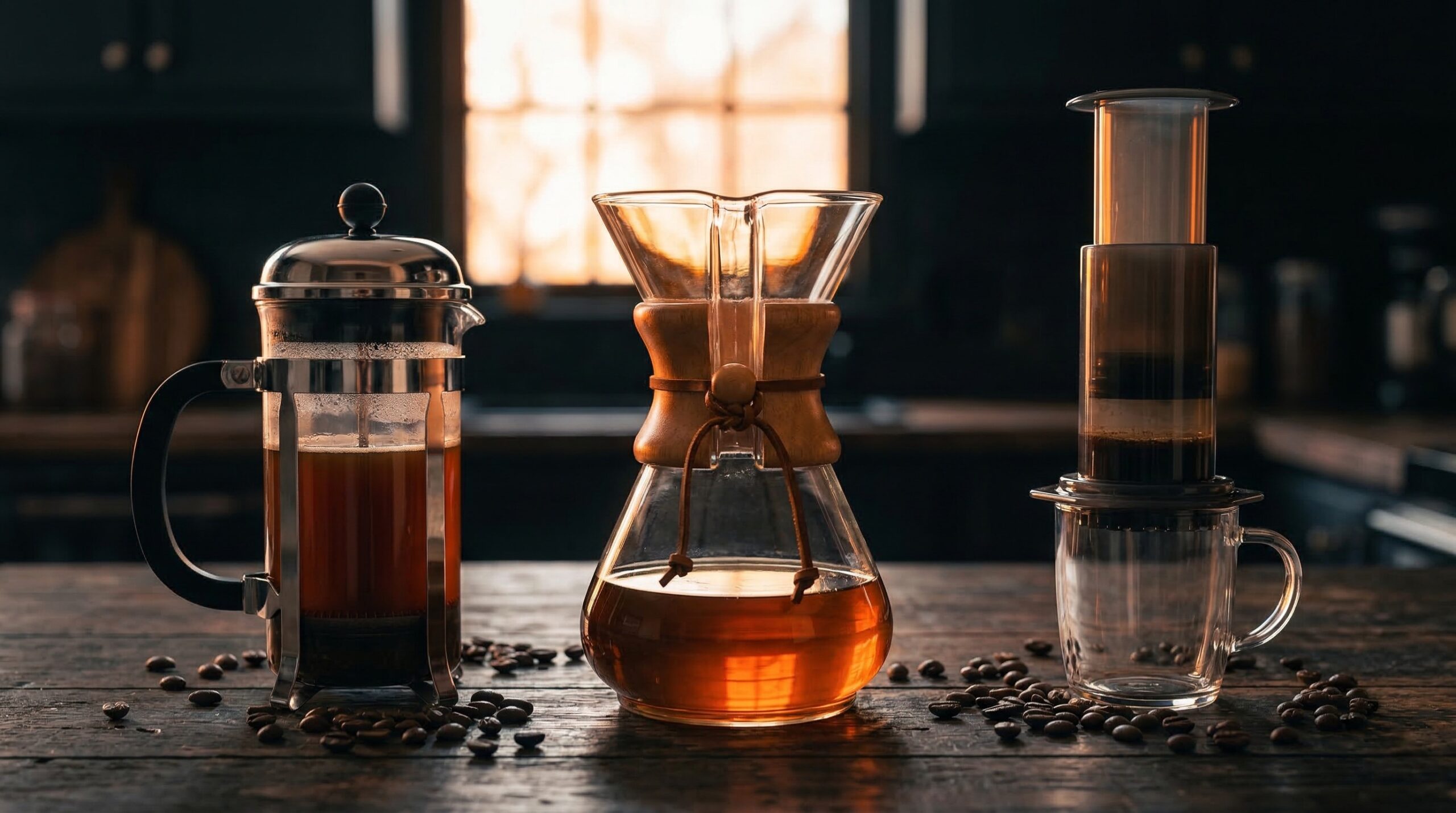
In practice, most alternatives fall into three broad camps. First are cone drippers, like a V60-style brewer. These tend to reward careful pouring and can highlight acidity, aroma, and cup definition. Second are flat-bottom brewers, like the Kalita Wave style, which are often seen as more forgiving because the bed geometry and flow pattern can produce more even extraction with fewer penalties for slight pouring mistakes. Third are hybrid or carafe-plus-dripper setups that separate the brewer from the serving vessel, which can be easier to clean, replace, or scale to different mugs and servers.
Research and hands-on testing across the coffee world generally point in the same direction: brewer geometry changes how water moves through the bed, and that changes flavor. The Specialty Coffee Association has long emphasized brew control, extraction, and consistency, and those ideas apply directly here. A brewer swap is rarely a magic shortcut. It is usually a trade: maybe better durability, maybe cheaper filters, maybe a fuller cup, but almost always a different recipe and workflow.
That is why the best Chemex alternative depends less on the logo and more on how you brew day to day. If you mostly make a single mug before work, your best option may be very different from someone brewing 700 mL for two people. The category is really about replacing a role: flavor profile, capacity, ownership cost, and daily ease.
Who Chemex Alternatives Fit Best
Chemex alternatives fit buyers who like manual coffee but want a brewer that lines up better with real life. The biggest group is people who rarely use the larger batch capacity a Chemex is known for. If you usually brew one or two cups, a smaller cone or flat-bottom dripper often makes more sense than a larger all-in-one brewer designed to shine with bigger doses.
They also fit buyers who are tired of treating the brewer like fragile glassware. If your coffee setup lives in a busy kitchen, shared apartment, or office break area, moving to a plastic, stainless, or ceramic dripper can be a practical change. Research from the National Coffee Association USA keeps the basics simple: good brewing depends on water, freshness, proportion, and control. You do not need a glass carafe format to brew excellent coffee, and for many people a more durable dripper is easier to live with.
This category is also a strong fit for people who want a different cup profile without leaving pour-over behind. If you find Chemex coffee too tea-like or too lean, a brewer with thinner filters or a flatter bed can shift the balance toward more body and sweetness. If, on the other hand, you like the clean side of Chemex but want a cheaper, lighter, easier-to-store option, a V60-style dripper is often the logical next step.
It can also be the right move for buyers who want more flexibility. A separate dripper lets you brew into different mugs, travel servers, or thermal carafes. That is useful if your weekday setup is different from your weekend routine.
The Kalita Wave style especially suits home brewers who want less punishment for imperfect pours. One buyer review captures that appeal well: “What a difference it makes in the taste of my coffee. I wasn’t a believer until I had my first sip.” — verified buyer, 5 stars.
In short, Chemex alternatives are best for people who still want intentional brewing but want to tune one of the following: batch size, filter convenience, durability, or flavor balance. If your goal is to keep the ritual but make it work better for your actual routine, this category makes sense.
Who Should Skip Chemex Alternatives
You should probably skip this category if what you really want is less hands-on brewing. Many people assume that moving away from Chemex automatically means an easier morning workflow, but that is not usually true. A different manual dripper may be more forgiving or cheaper to own, yet it still asks for attention to grind size, pour speed, ratio, and brew time.
Buyers who regularly make larger household batches should also be careful. A lot of popular alternatives are excellent for one mug or two cups but are not true replacements for the larger-batch role a Chemex can fill. If your normal brew is closer to 700 mL to 1 L, downsizing to a compact dripper may create more hassle, not less.
Another group that should pause is anyone who wants recipe continuity. Your current Chemex grind and pour pattern may not transfer well to a V60, Kalita, or hybrid brewer. Filter thickness, drain speed, and hole design all affect extraction. If you dislike dialing in or wasting a few brews while you re-tune your setup, switching may feel disappointing at first.
You should also skip glass-heavy options if your kitchen is rough on equipment. User feedback on the Kalita Wave family, for example, includes durability concerns with some versions: “After using it for 2 months the funnel part cracked, so I bought a new one, but this time stainless steel.” — verified buyer, 1 stars.
Finally, do not buy a Chemex alternative just because it looks modern or minimal. Appearance matters less than filter ecosystem and geometry. If the filters are hard to source, the brewer is sized wrong for your routine, or the material is too delicate for daily use, it will not feel like an upgrade no matter how good it looks on the counter.
Price and Value
One of the better reasons to move away from Chemex is ownership cost, but the savings depend on what you buy and how often you brew. Among the strongest mainstream alternatives, the Hario V60 Plastic 02 sits in the budget-friendly range at about $10 to $20, while the Kalita Wave option listed here typically lands around $40 to $50.
That price gap reflects two different kinds of value. The V60-style option is appealing if you want a low buy-in, light weight, and easy storage. It is one of the cheapest serious manual brewers you can buy, which makes it a smart fit for beginners, dorm setups, travel kits, or anyone who wants to experiment without spending much. The tradeoff is that cone brewers can be less forgiving, so low purchase price does not always mean lower effort.
The Kalita Wave style costs more up front, but many buyers see the value in its easier day-to-day consistency. If a brewer helps you get good cups with less fuss, that can be worth paying for. In coffee gear, value is not only about sticker price. It is also about how much coffee you waste while dialing in, how easy the filters are to find, and whether the brewer suits your normal batch size.
Filter cost is a major part of this discussion. Chemex’s thicker proprietary filters are a big reason people shop for alternatives in the first place. Common cone or wave papers are often easier to find and may cost less over time, depending on your local stores and brewing frequency. That said, do not assume every alternative is cheaper in the long run. If you buy a delicate glass model and replace it after a crack, your total cost changes fast.
Material matters to value too. Plastic usually offers the best durability per dollar. Ceramic can feel sturdier and retain heat well, but it is heavier and still breakable. Glass keeps the visual appeal many Chemex owners like, but it carries the same basic fragility concerns. For buyers comparing materials, general food-contact and handling guidance from the FDA food safety guidance is a sensible baseline: use food-safe gear from reputable brands, and avoid questionable accessories not designed for hot beverage use.
The practical value question is simple: are you paying for a brewer that fits your real routine? If yes, a modestly priced dripper can outperform a more expensive one that is awkward to use, overbuilt for your batch size, or tied to filters you hate buying.
Common Mistakes When Trying Chemex Alternatives
The most common mistake is assuming any pour-over brewer will behave like a Chemex if you use the same recipe. It usually will not. Different filter thickness, hole size, and bed geometry can make a brew run faster or slower, changing extraction and taste. If your first cup from a new dripper seems thin, bitter, or oddly sharp, that does not always mean the brewer is bad. It often means your old grind setting or pour structure is no longer the right match.
Another mistake is buying for looks instead of workflow. A brewer can have the same clean coffee-shop look as a Chemex and still behave very differently. Buyers often underestimate how much easier ownership becomes when the filters are sold locally, the brewer fits a standard mug, and the material can survive an accidental bump in the sink.
Capacity mistakes are also common. Many people replace a Chemex with a smaller dripper, then realize it is great for one mug but annoying for serving two people or making a larger morning batch. Buy for your usual brew size, not your least common one.
A fourth issue is expecting lower effort from a smaller brewer. A compact cone dripper may save counter space and lower filter cost, but it can still demand careful pours. The V60 style is a good example of a brewer that offers a lot of control, but that control cuts both ways: it rewards attention and exposes inconsistency.
Material choice trips people up too. If you want a daily driver in a busy kitchen, glass is often the risky choice unless aesthetics are a high priority. Home barista reports around glass and ceramic brewers regularly mention chips, cracks, or nervous handling. That does not make those brewers bad, but it should shape your expectations.
One more owner-reported pitfall is expecting immediate flavor improvement from a more forgiving brewer without adjusting your technique. A positive Kalita buyer quote gets at the upside—”What a difference it makes in the taste of my coffee. I wasn’t a believer until I had my first sip.” — verified buyer, 5 stars — but that kind of result still depends on decent water, fresh coffee, and a recipe that suits the brewer.
To avoid frustration, keep the first few brews simple. Start with a medium grind, a consistent coffee-to-water ratio, and steady pours. If drawdown stalls, go coarser. If the cup tastes weak and sour, go a bit finer or slow the pour. Guidance from the Specialty Coffee Association and the National Coffee Association USA supports the same core idea: control the basics first, then fine-tune variables one at a time.
FAQ
What type of brewer tastes most like a Chemex?
A cone brewer with a paper filter usually comes closest to the clean, bright style many people associate with Chemex. That said, it still may not taste identical because filter thickness and drawdown speed can change body and sweetness. If you want a similar cup profile, a V60-style brewer is often the closest starting point, while a flat-bottom brewer usually shifts toward a rounder, more forgiving result.
Are Chemex alternatives cheaper to own?
Often, yes. Many alternatives use more common filters and some cost much less up front than a larger glass carafe setup. The cheapest route is usually a plastic dripper with easy-to-find paper filters. But total ownership cost still depends on breakage risk, filter prices in your area, and whether you need to buy a separate server.
Is there a Chemex alternative that is easier to use?
Some are easier to brew consistently with, but most are not truly hands-off. Flat-bottom brewers are generally the safer bet if you want a little more forgiveness. Cone brewers often offer more control but can be less tolerant of uneven pouring. If your goal is less active brewing altogether, you may be happier looking beyond manual pour-over.
Can I use my Chemex recipe in another brewer?
Usually not without changes. Expect to adjust grind size, bloom, pour pattern, and total brew time when moving to another dripper. A recipe built around thick Chemex filters may run very differently in a V60 or Kalita. Research and industry guidance suggest that small differences in flow and bed geometry can materially affect extraction, so treat the new brewer as a fresh dial-in rather than a plug-and-play replacement.
What is the best Chemex alternative for one person?
For most solo brewers, a small dripper with easy filter access is a better fit than a larger brewer built around multi-cup batches. A V60-style dripper makes sense if you enjoy dialing in and want a cleaner, brighter cup. A Kalita Wave style is usually the better option if you value repeatability and want a little less penalty for small pouring mistakes.
Do Chemex alternatives need a gooseneck kettle?
Not always, but it helps. A gooseneck kettle gives you better control over flow rate and placement, which matters more with cone brewers and finer recipe adjustments. More forgiving flat-bottom brewers can still work decently without one, but controlled pouring usually improves consistency no matter which manual dripper you choose.
Are plastic drippers safe for hot coffee brewing?
Plastic drippers from reputable coffee brands are commonly used for hot brewing and are often chosen because they are light, durable, and affordable. The key is buying food-contact-safe gear made for brewing, not generic accessories with unclear heat tolerance. If safety and material quality are top concerns, review general handling and food-contact advice from the FDA food safety guidance.
Should I choose cone or flat-bottom if I want better consistency?
For most buyers, flat-bottom is the safer answer. Cone brewers can produce excellent clarity and are popular with skilled home brewers, but they usually respond more strongly to pouring technique. Flat-bottom brewers are often easier to repeat day after day, which is why they are such a common recommendation for people moving away from Chemex but staying in manual pour-over.
Looking for these on Amazon? Browse chemex alternatives on Amazon →
Bottom Line
The best Chemex alternative is the one that matches your normal batch size, preferred cup style, and tolerance for recipe tweaking. For most people, a forgiving flat-bottom brewer is the easiest all-around switch, while a V60-style cone is the better fit if you want to stay closer to the clean, expressive side of Chemex coffee.
Do not buy based on looks alone. Geometry, filter availability, and material choice will matter far more once the brewer becomes part of your daily routine.
Affiliate disclosure: This page includes affiliate links. We earn a small commission if you buy through them.