
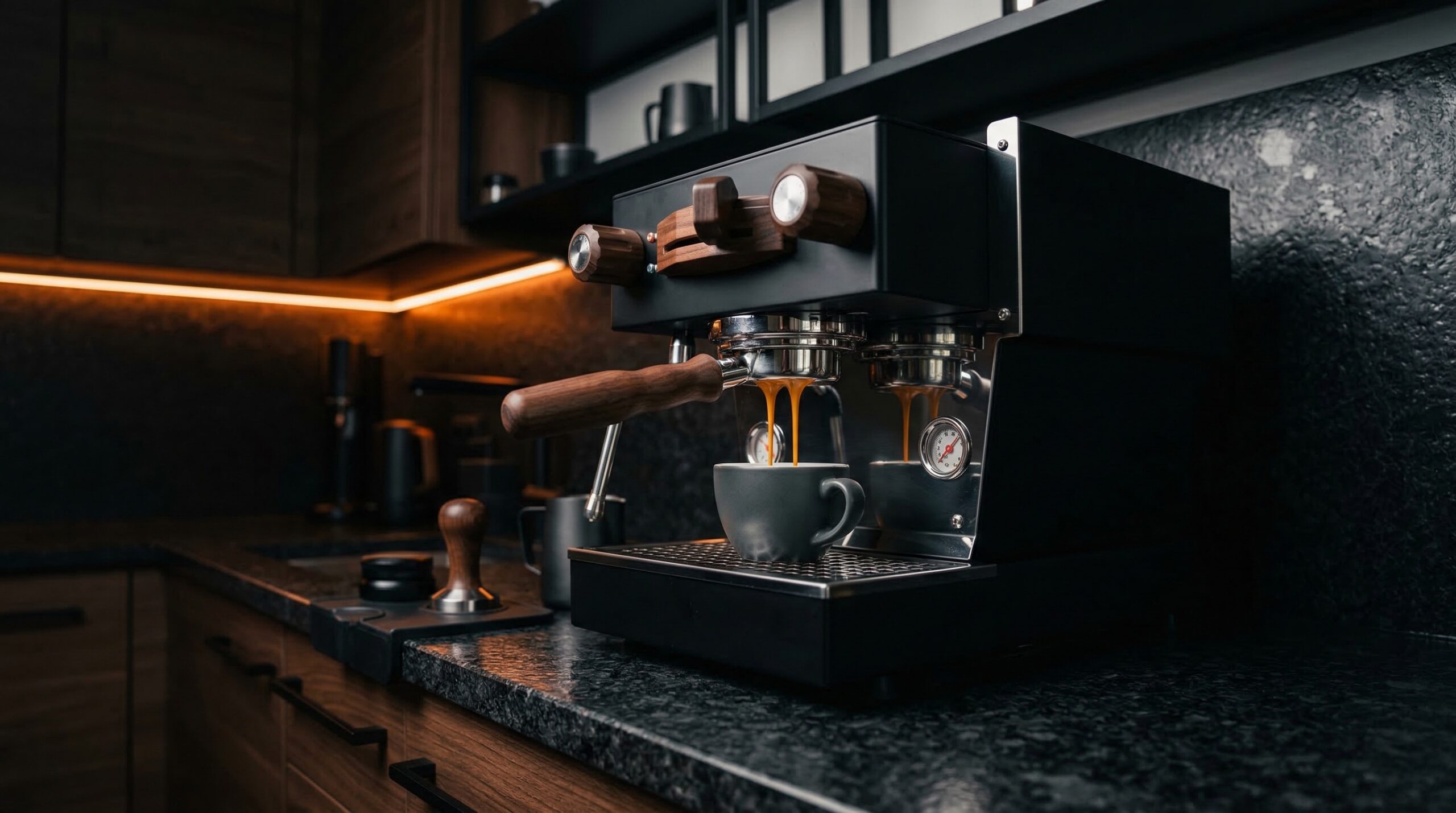
Best at Home Espresso Machine

TL;DR

Finding the perfect espresso setup involves balancing your desire for convenience with your appetite for a new hobby. For most people starting their journey in 2026, the Breville Bambino Plus remains the gold standard because it handles the difficult parts of milk steaming while delivering consistent shots. If you are on a tighter budget, the Casabrews 5418 Pro offers a surprising entry point that outperforms its price tag. Enthusiasts looking for a “forever” machine often gravitate toward the Rancilio Silvia for its industrial build or the Profitec Go for its modern precision. Meanwhile, manual purists find joy in the Cafelat Robot, which removes all electronics from the equation. The most critical takeaway is that your machine is only half the battle; pairing it with a high-quality coffee mill is what truly determines the quality of your morning latte.

After testing over a dozen espresso machines and various bean mills across different price points, I have found that the “best” machine is rarely the most expensive one. It is the one that fits your morning workflow and doesn’t feel like a chore to maintain. Your journey from pod-based convenience to authentic espresso is a rewarding transition, but it requires understanding a few non-negotiables before you swipe your card. In this guide, I’ll walk you through the top-performing hardware and the real-world trade-offs you should expect.

Product Name Best For Price Range Pros/Cons Visit
Breville Bambino Plus Beginners and Milk Drinks $450 – $500 Fast heat-up / Lightweight plastic build
Casabrews 5418 Pro Entry-Level Value $180 – $220 Very affordable / Smaller water tank
Rancilio Silvia Durability (BIFL) $850 – $1000 Built like a tank / Long wait for steam
Gaggia Classic Pro Customization & Modding $450 – $550 Huge community / High learning curve
Profitec Go Modern Precision Enthusiasts $900 – $1100 PID control included / Large footprint
La Marzocco Linea Micra Professional Luxury $3800 – $4000 Commercial performance / Extremely high cost
Cafelat Robot Manual Purists $400 – $500 Zero maintenance / No milk steaming
La Pavoni Lever Machines Traditional Ritual $900 – $1200 Beautiful aesthetics / Hard to master

How to Choose: The 4 Non-Negotiables

Your choice of machine should be dictated by your lifestyle, not just the shiny chrome on the counter. If you’re transitioning from something like a Nespresso machine, you’re moving from a convenience-first mindset to a quality-first ritual. To avoid buyer’s remorse, consider these four factors deeply.

1. Your Skill Level (Manual vs. Semi-Automatic vs. Automatic)

How involved do you want to be in the process? Automatic machines do everything for you, but they often lack the soul of a true shot. Semi-automatic machines are where most hobbyists land. They handle the water temperature and pressure, but you decide when the shot starts and stops. Manual machines, like lever-style units, require you to provide the physical pressure. Your patience level will dictate whether you find this rewarding or frustrating.

2. Brewing Capacity and Group Heads

If you are the only coffee drinker in your home, a single boiler or a thermoblock machine is perfectly fine. However, if you regularly host guests or have a partner who also needs a latte before work, capacity becomes an issue. Single boilers require a waiting period between brewing coffee and steaming milk. Dual boilers or heat exchangers allow you to do both at once, which is a massive time-saver during the morning rush. For a deeper dive into different brewing technologies, our espresso machines category page provides a comprehensive breakdown.

3. Maintenance and ‘The Ritual’ vs. Convenience

Every espresso machine requires cleaning. Backflushing, descaling, and cleaning the steam wand are part of the deal. Some machines are easier to take apart than others. If you enjoy tinkering, a machine with a large community of modders is ideal. If you just want a reliable caffeine delivery system, look for something with automated cleaning cycles.

4. Electricity Voltage and Home Power Limits

This is the most overlooked detail. High-end espresso machines often pull a lot of power. Most standard home kitchens can handle a 15-amp machine, but some commercial-grade units might require a dedicated 20-amp circuit. Always check your MCB (Miniature Circuit Breaker) capacity. Reduced voltage or power spikes can cause long-term damage to the delicate PID electronics inside modern machines. Browsing our coffee makers hub can help you compare power-hungry espresso units with more efficient drip systems.

The Best Entry-Level Espresso Machines (Under $500)

Breville Bambino Plus

This machine has earned its reputation as the ultimate gateway to real espresso. In practice, pulling shots with this machine consistently hits the sweet spot because of its pre-infusion technology, which gently soaks the grounds before applying full pressure. It features a proprietary Thermojet heating system that reaches the correct temperature in just three seconds, which is nearly unheard of in this price bracket.

The Good

  • Incredible speed; it’s ready to brew almost instantly after turning it on.
  • The automatic milk steaming is surprisingly capable, creating legitimate microfoam for latte art without a steep learning curve.
  • Compact footprint fits easily under low kitchen cabinets.

The Bad

  • The lightweight build means the machine can shift on your counter when you lock in the portafilter.
  • It uses a 54mm portafilter rather than the industry-standard 58mm, which limits your options for third-party accessories.

Should You Buy? Best for busy professionals who want real espresso quality without the 20-minute heat-up time. Skip if you want a heavy, industrial feel.

Casabrews 5418 Pro

If you’re looking for a budget-friendly way to test the waters of home espresso, this model is a standout. It’s surprisingly compact and provides a pressurized basket system that is very forgiving if your beans aren’t perfectly fresh or your mill isn’t top-tier. It is a no-frills machine that prioritizes the basics of extraction.

The Good

  • Extremely affordable, often found for less than half the price of its competitors.
  • Very easy to operate for someone moving away from a pod-based system.
  • Includes a built-in pressure gauge, which is a rare feature at this price point.

The Bad

  • The steam wand is a bit weak, making it difficult to get that silky texture for flat whites.
  • Durability is a common concern in long-term reviews; don’t expect it to last a decade.

Should You Buy? Best for students or budget-conscious beginners. Skip if you plan on making multiple milk-based drinks in a row.

The ‘Buy It For Life’ (BIFL) Mid-Range Picks

Rancilio Silvia

Affectionately known as “Miss Silvia” in the coffee community, this machine is essentially a commercial unit shrunk down for home use. There are no fancy screens or plastic internals here—just a heavy brass boiler and a stainless steel frame. It is built to be repaired, not replaced, making it a sustainable choice for those who hate the “throwaway” culture of modern appliances.

The Good

  • Unmatched build quality in the sub-$1000 category; it feels like an industrial tool.
  • Large 58mm commercial group head means you can use professional-grade baskets and tampers.
  • Incredible steam power once the boiler reaches temperature.

The Bad

  • Temperature surfing is required to get consistent shots since it lacks a built-in PID controller.
  • It takes at least 15 to 20 minutes to fully heat up.

Should You Buy? Best for the “buy it once” crowd who isn’t afraid of a bit of a learning curve. Skip if you want push-button simplicity.

Gaggia Classic Pro

This is the favorite child of the home barista community. The reason is simple: it is remarkably capable out of the box, but it is also the most customizable machine on the market. From adding PIDs to changing the steam tip, the Gaggia Classic Pro can grow with you as your skills evolve. Most owners end up modifying theirs within the first year to squeeze out professional-level performance.

The Good

  • The 3-way solenoid valve provides a “dry puck,” making cleanup much easier.
  • A massive online community means you can find a tutorial for any issue or upgrade.
  • Classic, timeless Italian design that looks great on any counter.

The Bad

  • The factory-set pressure is often higher than the ideal 9 bars, requiring a spring swap for optimal results.
  • The small boiler means you can’t brew and steam at the same time.

Should You Buy? Best for the tinkerer who wants a machine that can be “perfected” over time. Skip if you don’t want to perform minor surgery on your appliances.

Profitec Go

While the Gaggia and Rancilio are old-school legends, the Profitec Go is the modern answer to what a home barista actually needs. It comes standard with a PID (digital temperature control) and an external pressure adjustment, features that usually cost hundreds more. It bridges the gap between a starter machine and a high-end luxury unit perfectly.

The Good

  • Digital display doubles as a shot timer, which is incredibly helpful for consistency.
  • Fast heat-up time compared to other single-boiler machines.
  • Superior temperature stability results in much sweeter, more balanced espresso.

The Bad

  • The drip tray is somewhat shallow and fills up quickly.
  • The design is very “boxy” and industrial, which might not suit every kitchen aesthetic.

Should You Buy? Best for the serious hobbyist who wants precision controls without having to mod the machine themselves. Skip if you are short on counter depth.

The ‘End-Game’ and High-End Luxury Setups

La Marzocco Linea Micra

La Marzocco is the name you see in high-end specialty cafes, and the Linea Micra is their love letter to the home user. It is a dual-boiler powerhouse that offers the exact same thermal stability as their $20,000 commercial units, just in a footprint that fits on your kitchen island. It is the definition of “end-game” hardware.

The Good

  • Rotary pump is whisper quiet and provides incredibly smooth pressure.
  • Commercial-grade steam power allows you to froth milk in seconds.
  • The app integration allows you to schedule heat-up times so it’s ready when you wake up.

The Bad

  • The price is a major barrier; it costs as much as a decent used car.
  • Maintenance requires specialized parts that can be more expensive than average.

Should You Buy? Best for the espresso purist who wants commercial results at home and has the budget to match. Skip if you aren’t obsessed with every micro-detail of your shot.

Specialty Choice: Lever & Manual Machines

Cafelat Robot

If you want to remove all the complexity of pumps, boilers, and electronics, the Cafelat Robot is your answer. It is a manual lever machine where you are the pump. By pushing down on the arms, you control the pressure profile of the shot. It is a tactile, mechanical experience that many find deeply satisfying. It’s also one of the few machines that can produce “god shots” for under $500.

The Good

  • Virtually zero maintenance; there are no internal pipes to scale or pumps to fail.
  • Allows for “pressure profiling,” which lets you save shots that were milled too coarse or too fine.
  • Extremely portable; you could easily take this on a camping trip or to the office.

The Bad

  • There is no way to steam milk with this device; you would need a separate milk frother.
  • Pre-heating the heavy steel components is necessary for light-roast coffees.

Should You Buy? Best for the espresso minimalist who only drinks black coffee. Skip if you need a latte every morning.

La Pavoni Lever Machines

Owning a La Pavoni is like owning a vintage Italian sports car. It is beautiful, temperamental, and incredibly rewarding when you get it right. These machines have been in production for decades with very few changes, emphasizing a tradition of manual brewing that predates modern computer-controlled units.

The Good

  • Beautiful chrome or copper finishes that serve as a kitchen centerpiece.
  • Small footprint and very quiet operation.
  • Teaches you more about the physics of espresso than any other machine.

The Bad

  • Thermal management is a nightmare; the machine gets too hot after 2-3 shots, ruining the flavor.
  • The small lever requires a fair amount of physical strength to operate correctly.

Should You Buy? Best for the traditionalist who views coffee as an art form. Skip if you want to make back-to-back drinks for a group.

Crucial Component: The Mill Pairing

I cannot stress this enough: do not spend $1,000 on a machine and then use pre-processed coffee or a cheap blade mill. Espresso requires a precise particle size that regular coffee mills simply cannot achieve. If you’re looking for recommendations, our coffee grinders section breaks down the best options for every budget.

For a reliable electric setup, the Baratza Encore ESP or the DF54 are fantastic entry points. If you have the budget, the Niche Zero is widely considered the best single-dose unit for home baristas because of its low retention. For those who don’t mind a bit of a workout, manual mills like the Kingrinder K6 provide exceptional particle consistency for a fraction of the price of electric units. Just remember that the mill is actually more important than the machine when it comes to the final taste in the cup.

Other Notable Alternatives Worth Considering

  • Nuova Simonelli Oscar II: A heavy-duty heat exchanger machine that offers professional steaming power for a mid-range price. Great for latte lovers who don’t need a lot of digital bells and whistles. Check Price
  • Kees van der Westen Speedster: The ultimate “money is no object” statement piece. It’s custom-built in the Netherlands and offers performance that exceeds almost anything else on the market. Check Price
  • Eureka Mignon Oro: While technically a mill, it’s a frequent partner for high-end machines because of its silent operation and incredible build quality. Check Price

Best Espresso Machines by Segment

Best for Beginners

The Breville Bambino Plus wins here because it removes the intimidation factor. Its automated milk steaming and quick start-up make it the perfect bridge from pod machines to semi-automatics.

Best BIFL (Buy It For Life) Option

The Rancilio Silvia is the clear winner for longevity. Its heavy-duty components and simple design ensure that with basic maintenance, it will be serving you espresso for decades to come.

Best for Small Counters

The Cafelat Robot takes up almost no space and requires no electricity, making it the king of compact setups. If you need a powered version, the Casabrews 5418 Pro is exceptionally slim.

What Real Users Are Saying (Reddit Insights)

General Sentiment

Across communities like r/espresso, the shift from Nespresso or Keurig to a dedicated espresso machine is often described as a “one-way street.” Once users experience the depth of flavor from freshly processed beans, they rarely go back. However, there is a strong emphasis on the “hobbyist” nature of this pursuit. Users frequently remind newcomers that it takes time to “dial in” a shot, and your first few attempts will likely taste terrible.

Top Complaints & Warnings

The most common frustration among new owners is the “hidden cost” of accessories. You’ll quickly find that you need a high-quality tamper, a precision scale, and a WDT tool to get the results shown in YouTube videos.

“Be warned this can be a very expensive hobby. Breville and Delonghi work fine, but you must budget for a decent mill. This will save you from lots of headaches down the road.” — r/espresso

Another major warning is the “Fatigue Factor” with manual mills. While they offer great value, many users report that hand-processing beans every single morning becomes a chore after the first few months, eventually leading them to buy an electric unit.

Budget Tips & Value Picks

The community consensus for the “best bang for your buck” is the combination of a Breville Bambino and a Kingrinder K6. This setup allows you to produce cafe-quality drinks for under $600. Users also suggest looking at the used market for the Gaggia Classic, as these machines are so durable that a 10-year-old unit can often be restored to like-new condition with just $50 in parts.

Frequently Asked Questions

Is it worth buying an espresso machine with a built-in mill?

While machines like the Breville Barista Express are convenient, most enthusiasts recommend separate units. Built-in mills often produce more heat, which can affect bean flavor, and if one part breaks, the whole machine is out of commission. Opting for a standalone machine like the best espresso machine for your budget and pairing it with a dedicated mill like the Baratza Encore ESP offers better long-term flexibility.

How much should I realistically budget for a first-time espresso setup?

A realistic entry-level budget is between $500 and $700. This covers a reliable machine like the Breville Bambino Plus ($450) and a capable manual mill or an entry-level electric one like the Turin SK40. Don’t forget to set aside $50-$100 for essential coffee accessories like a digital scale and a knock box, which are vital for a consistent ritual.

What is the difference between a pressurized and unpressurized portafilter?

Pressurized baskets have a small hole that creates artificial pressure, making them forgiving for older beans or inconsistent milling. Unpressurized (standard) baskets rely solely on the coffee puck’s resistance. While unpressurized baskets are harder to master, they produce significantly better flavor and crema. Machines like the Gaggia Classic Pro include both, allowing you to transition as your skills improve.

Can I use a high-end espresso machine with standard home electricity voltage?

Most home machines, including the Profitec Go and Rancilio Silvia, run perfectly on standard 110-120V outlets. However, some luxury dual-boiler machines perform better on a 20-amp circuit to heat both boilers simultaneously. Always check the manufacturer’s specs before buying to ensure your kitchen wiring can handle the load without tripping your breakers.

Is a manual lever machine like the Cafelat Robot good for beginners?

The Cafelat Robot is excellent for beginners who only want espresso and are willing to learn the “feel” of extraction. Because it has no electronics, it is much simpler to maintain. However, it requires a high-quality mill to work correctly. If you prioritize milk-based drinks like lattes, a semi-automatic with a steam wand would be a better starting point.

Final Verdict: Which Machine Should You Buy?

Choosing the right machine comes down to how much you want to participate in the brewing process. If you want a reliable, fast, and modern machine that handles the hard work for you, the Breville Bambino Plus is the winner. For those who want to build a deep relationship with the craft and don’t mind a slower pace, the Gaggia Classic Pro or the Profitec Go offer a much higher ceiling for quality. And if you are simply looking for the best possible shot for the lowest price—and don’t mind a bit of arm work—the Cafelat Robot is a masterpiece of engineering. No matter which path you choose, remember that fresh beans and a quality mill are the true secrets to that perfect morning cup.

This page includes affiliate links. We earn a small commission if you buy through them.